

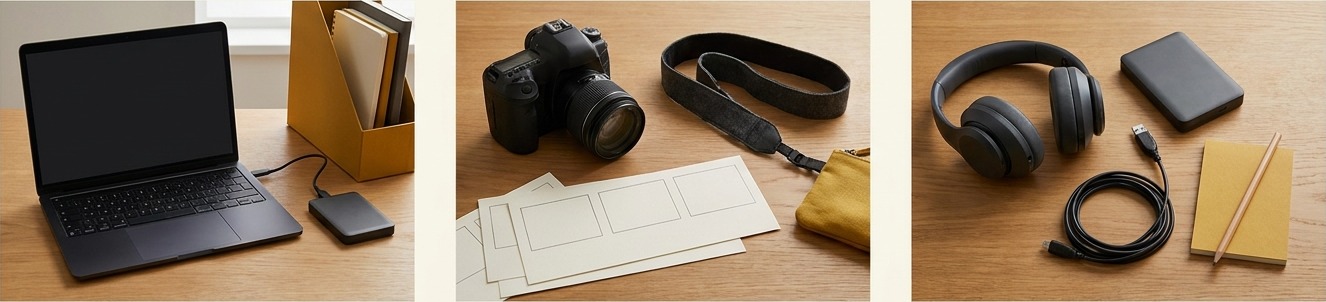
Images are reused AI-generated editorial illustrations, not documentary photographs or verified product screenshots.
Cut an MP3 in Audacity by preserving the original, reviewing the intended selection and checking the exported audio. MP3 is a lossy format, so editing and exporting a new MP3 can involve another encoding step. Do not claim that every cut is a lossless operation or that the project file replaces the final deliverable.
Work from an authorized preserved source
Confirm permission to edit and distribute the audio. Keep the original file unchanged and use an appropriate project copy. Check the full clip and desired boundaries before removing sections. A filename or downloaded sample does not establish usage rights, and accidental selection can remove content beyond the intended edit.
Review boundaries and edit scope
Select the relevant region under the installed version’s supported workflow. Distinguish keeping a chosen section from deleting it. Listen across cut boundaries for missing words, clicks or abrupt transitions. In a multitrack project, confirm which tracks are selected and whether the edit changes their synchronization. A clean-looking waveform is not sufficient acceptance evidence.
Export deliberately and inspect playback
Choose the required output format and settings with the recipient’s needs in mind. Re-encoding an MP3 is not a guarantee of identical source fidelity. Consider an appropriate lossless working or delivery format when required. Check the actual saved file, beginning, ending and metadata where relevant before handing it over.
A practical checklist
- Preserve the authorized original source.
- Verify keep-versus-delete selection intent.
- Check affected tracks and synchronization.
- Review MP3 re-encoding implications.
- Listen to the actual exported boundaries.
Worked example
Illustrative example: a creator trims an original synthetic narration to remove a long pause. The source MP3 remains untouched and the editable project is retained. The team checks both sides of the cut and the exported file. It does not describe the new MP3 as bit-identical or necessarily lossless simply because only a short region was removed.
Common questions
Is every MP3 edit and export lossless? No. Is the saved project the final playable file? Not generally. Can a selection affect more than one track? Check the project state.
What to do next
Keep source preservation and export checks in the editing notes. A correct cut is defined by intended content and verified output, not merely a shorter file duration.
Sources and further reading
Related reading
- Remote Video Editing Jobs: Skills, Samples and Safer Applications
- Exporting Your Data Before Canceling a Software Subscription
Upgrade Audacity: Back Up Projects and Check Plugin Compatibility